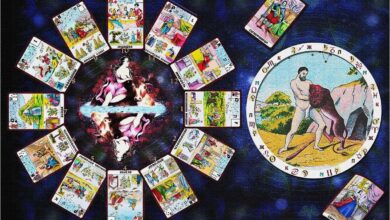
Stages of development of relationships between a man and a woman

Relationships are difficult at almost any time. One way or another, we have to deal with our own childhood traumas, unmet needs, early responses, illusions, domestic scenarios and other undercurrents that affect us now.
On the one hand, this is a painful process, full of tears, disappointments and resentments, on the other hand, it is a natural and publicly accessible path of personal development and the opportunity to live a full, rich destiny.
Fortunately, the process of relationships between partners has been well studied in psychology. It is divided into a couple of stages or stages through which any couple goes. Thus, in analytical psychology the following stages are distinguished: search, recognition, satisfaction of needs, return and exchange.
Psychologist Tatyana Vasilets will tell you about this in more detail.
Relying on Jung’s well-known position about the duality of the human psyche, which manifests itself in the fact that the psyche of a friend includes not only the masculine, but also the feminine principle (anima), and the psyche of a lady – not only the feminine, but also the masculine principle (animus), it is possible to suggest that the masculine and feminine in the inner cosmos are not only in the active course of being, but also more or less successfully interact with each other.
The relationship between the masculine and feminine principles in the inner world is mirrored in the stages of development of the relationship between a woman and a real man.
The initial stage of relationship development is the search stage. It is contained in the search for reflections of one’s own internal male and female parts in real people – representatives of the opposite sex.
In fairy tales, the search for brave men is their famous quest for happiness, the search for adventure. For heroines, this is the election of grooms, well arranged by kings for their own daughters. These stories reflect the healthy canons of search activity: friends themselves win their own happiness, this happens through competition, struggle, overcoming themselves and various obstacles. Ladies get a groom who wins the competition organized by her father, in other words, a groom approved by the father, which indicates a serious moment of transferring paternal responsibility to the daughter’s chosen one.
Thus, fairy tales teach that a lady’s search experience must be carried out under the wing of her father’s protective function, the patronage of a strong friend, and those who test the lady’s future chosen one should first of all be her dad.

Because now many ladies are formed in the absence of full-fledged paternal protection, the protective paternal function can be fully performed by the healthy masculine principle of the lady, initiated (developed) to a perfectly functioning internal paternal protective principle.
The decline in paternal function in modern Western society has become the reason that now the stage of conscious search for a partner is preceded by a more unconscious type of search activity. It can be identified as the zero stage of the search. We called it bodily. We are talking about the deliberately impersonal process of people satisfying their ownpleasureemotional needs, despite the fact that these relationships under no circumstances achieve complete depersonalization. Each, even the most fleeting contacts between a woman and a man, have endless depth. Denial of this depth helps an immature person simply by trying to protect himself from the fear of rejection and from a vague feeling of his own lack of competence in the field of relationships.
A high level of such competence is characteristic only of a mature personality. The maturity of the male phenomenon (both internal and external) is especially responsible here. At the time when the masculine reaches maturity, it ascends to the stage of fatherhood, which is a reflection of the divine paternal principle. Based on this, the message is clear: to the extent that real fathers emotionally neglect their own children, to the same extent their growing children are deprived of the spiritual experience of relationships.
The bodily stage is dictated by instinctive motives, which, in the absence of paternal protection, act as an exposed archaic mechanism for procreation. The instinctive nature of the zero stage of the search also contains a fully defined spiritual goal: to find one’s own true half using the method of someone “pleasureual testing.” The bodily search stage is common not only among young people, but also among people of second age groups, at a time when they are directly or indirectly engaged in the search for a “fate partner.”
Everyone who has experienced the collapse of a relationship returns to the search stage, including married women and married men experiencing domestic, age-related and other personal crises. Women and Men who do not have a partner live in a state of search, not always fully aware of it. An obsessive search for a partner is an indicator of a certain immaturity of the individual. This statement suggests a simple conclusion: the initiation of personality maturation brings salvation from the compulsion of the search.
During the search stage, marriages often occur and children are born. But, in order to achieve harmonious relationships, search motives alone are too few. During the search, its participants strive primarily for such a responsible emotional component of relationships as recognition. When recognition is accomplished, the relationship moves to the next, larger stage of development.
The essence of relationships at the stage of recognition is that a woman and a man will, as it were, define each other as their own inner woman and man.
Meeting a person who sufficiently reflects certain features of the internal masculine and feminine qualities of a national personality brings a state of special admiration. This is a recognizable period of falling in love, which in an analytical sense can be viewed as a moment of successful “throwing out projections.”
At this stage, partners for the first time really find and define the male and female parts of their own souls in each other. A man finds in his beloved the features of his own inner lady that are significant to him, and a lady finds in her chosen one the nuance of her inner friend that is especially relevant for the development of her femininity.

It is curious that first the perfect nuances of male and female projections are “thrown out” onto the partners. But as the relationship develops, more and more traumatized fragments of the anima (female in the guy) and animus (masculine in the lady) are “thrown out,” those that require healing first.
Fortunately, partners, with cosmic precision, contain in their inner world a sufficient number of perfectly matched, both perfect and damaged, masculine and feminine fractals. It follows that any final separation indicates that the partners’ personal “mirroring” ceases to exist to the degree necessary to maintain their alliance. In other words, they cease to be reflections of each other because the personality structure of one changes at a rate comparable to the other’s transformations.
In fairy tales, recognition (falling in love) corresponds to the moment in the plot when the handsome, brave men meet. Falling in love, which in most cases is symbolized by the magical, beautiful encounter of the brave men, is only the initial, starting point of the relationship. In the language of myths and fairy tales, the experience of collective consciousness tells us that the woman’s meeting and the man’s moment are not sufficient to form a harmonious alliance. Consequently, divisive forces soon invade the couple’s space between brave lovers, while blessing characters inevitably show them the way to overcome obstacles.
So, lovers constantly face numerous trials and, accordingly, the need to go through numerous stages in the development of their relationship. Climbing the “ladder of relationships” is an inevitable labor, and only by standing on these sacred steps do a woman and a man achieve shared happiness.
The stage (step) of recognition gives way to the stage of satisfying unmet needs. This is a period of healing internal traumas, experiencing those “missed” stages of personal development where the partners’ childhood needs were not met or were met too little, leading to the emergence of certain psychotherapeutic shortcomings and “holes in the self” (G. Ammon). These include the early childhood desire for absolute love (“love me as I am”), while the little one experiences a lack of complete and total acceptance, timely care, understanding, and participation. The lack of self can relate to physical, creative, and other needs. At the stage of need satisfaction, a woman and a man inadvertently and passionately expect from their partner those actions, feelings, and deeds that they did not receive or did not sufficiently receive from their own parents in their youth.
The “mirroring” of a woman and a man’s reflections in each other is also explained by the fact that any of the partners actually contains in the structures of their own personality a rich potential for satisfying (or pseudo-satisfying) the unsatisfied needs of the other.
The unconscious principle of “satisfaction from the opposite” is often used here. For example, if a lady was rejected by her father or mother in her youth, she finds a man who will reject her. Over the course of such a relationship, the lady finally acquires the opportunity, not realized in her youth, to throw all her strength into being recognized “no matter what!”
In this case, the lady manifests an exaggerated childish need for recognition not only of the significance of her personality, but also for recognition of her femininity. If satisfaction does not occur or it is too little, the relationship between a woman and a man can get stuck at this stage. A simple example for getting stuck is the vicious circle of separations and reconciliations in relationships with dependent (drunkenness, drug addiction) partners.

The man, who was unable to psychologically separate from his mother and does not have a healthy male example in the person of his own father, tries to have a relationship with an authoritarian lady. His main unconscious motive is the desire to defeat her and free himself from her controlling influence. Liberation and the Illusion of victory are provided not only by drug addiction and alcoholism, but also by workaholism and other infantile forms of behavior, which are based on avoidance of responsibility for relationships: spiritual, material,
pleasurepleasureOtherwise, partners at the same time expect and demand from each other complete love and absolute acceptance, which they have so lacked since childhood. Because the stage of satisfying needs has a temperament of mutual dependence, and the latter, as a form of captivity, always leads to the desire to free oneself, such relationships hide enormous reserves of repressed aggression, which sometimes breaks through
stage, development, attitude, man, woman