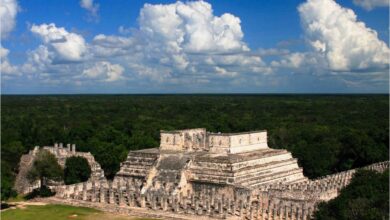
Amazing journeys to the Pyramids – history, facts, mysteries

For a long time, humanity has experienced an irresistible attraction to exploring unknown spaces and discovering new worlds. One of the most mysterious and amazing places on earth are ancient structures rising in deserts and jungles. These mysterious structures, woven from stone and time, attract with their mysticism and incomprehensibility. They tell us that our ancestors had incredible knowledge and skills that were able to overcome time and maintain their greatness.
Contents of the article:
Archaeologists and historians continue to study these ancient monuments, trying to uncover their secrets and unravel the mysteries they hold. The grandeur and complexity of these structures make us wonder what tools and technologies ancient civilizations had to create such amazing monuments of architecture and engineering.
People seeking to penetrate the secrets of the pyramids embark on an exciting journey through time to recreate history and learn more about ancient civilizations. Each pyramid has its own unique story related to the faith, religion, culture and power of the era in which it was built. They are witnesses of the past, incomprehensible witnesses who keep many mysteries and secrets, ready to be revealed only to the most curious and exploratory minds.
History of expeditions to the pyramids: from ancient times to the present day

For centuries, people have had an irresistible attraction to the mysterious structures towering above the desert. Travel to these ancient monuments has become an integral part of human history. The desire to learn more about the past, uncover the secrets of ancient civilizations and feel the grandeur and mysticism of the pyramids attracts travelers from all over the world.
Ancient Egypt: First Expeditions
- Pharaonic campaigns
- Research by Greek scientists
- Roman and Arabian travelers
Already in ancient times, people turned to the pyramids with wonder and respect. Pharaohs sent expeditions to the pyramids to perform rituals and worship their ancestors. Great Greek scientists such as Herodotus visited Egypt to study the pyramids and left valuable records of their observations. The times of the Roman Empire and the Arabian Caliphate also brought new journeys to the pyramids, where people tried to understand their structure and significance in history.
Age of Colonization: Discovering New Worlds

- Conquistadors and pyramids of Mesoamerica
- European travel to Egypt
- Archaeological discoveries in the 19th century
With the advent of the era of colonization and the discovery of new worlds, travel to the pyramids expanded its boundaries. The conquistadors of the Spanish Empire discovered numerous Mesoamerican pyramids, such as the Mayan and Aztec pyramids, which became objects of research and interest. European travelers also traveled to Egypt, where they discovered and studied many famous pyramids. In the 19th century, archaeological discoveries revealed new aspects of the history of the pyramids and attracted the attention of the entire world community.
Today, travel to the pyramids continues and attracts thousands of people. Modern researchers, archaeologists and simply curious travelers continue to reveal new facets of the history of the pyramids, leaving traces of their discoveries and impressions.
Pyramids: symbol of ancient Egyptian civilization
Pyramids, these unique structures, served as the burial place of the pharaohs and symbolized eternity and immortality. They were built with great skill and represented not only graves, but also a kind of sanctuary, where the soul of the pharaoh continued to exist after death.
These grand structures were created using magnificent stones collected from different parts of Egypt. They were perfectly aligned with the cardinal directions and were wrapped in a mystery that has not yet been fully revealed.
The pyramids also served as a symbol of the power and wealth of the pharaohs, and their unique design and architecture reflected the complexity and sophistication of ancient Egyptian civilization. They were the main construction achievements of their time and personified the greatness and power of the pharaohs.
Popular routes to ancient buildings in modern travel
In modern times, routes leading to the majestic buildings of antiquity have become one of the most popular among tourists. These unique architectural monuments attract travelers from all over the world with their mystery, mystery and historical significance.
Historical path to the past
One of the most fascinating historical routes is the journey to the ancient pyramids. Rising above the sand dunes, these architectural masterpieces are witnesses of the distant past and reflect the grandeur of ancient civilizations. While traveling along this route, tourists plunge into the world of mysticism and mysteries, explore ancient relics and enjoy magnificent views of the surrounding nature.
Modern paths to history
However, in addition to traditional routes, there are also modern paths to the pyramids. Today, tourists can choose not only classic excursions, but also unique programs that include active adventures and unusual travel formats. For example, traveling by helicopter or hot air balloon allows you to see the pyramids from a bird’s eye view and enjoy stunning panoramic views.
Nowadays, popular tourist routes to the pyramids offer a variety of travel options, allowing every tourist to find something to suit their taste. Regardless of the chosen route, the impressions of visiting these ancient buildings remain unforgettable and are imprinted in the heart of every traveler.
Secrets and mysteries of ancient structures: what do ancient pyramids hide?
One of the mysteries of the pyramids is their construction. How were ancient people able to create such monumental structures without the use of modern technology? How did they lift huge stone blocks and place them at a height? These questions still remain unanswered and are of interest to researchers.
- One of the main mysteries surrounding the pyramids is their function. What were they built for? Some scientists believe that the pyramids were used for ritual purposes, as places of worship of the gods. Others suggest that they had astronomical significance and were used to observe the stars and planets. There are those who believe that the pyramids were tombs for the pharaohs and took part in burial rituals.
- Another mystery of the pyramids is their internal structure. Galleries, rooms and passages have been discovered inside the pyramids, but there is still no consensus on what purposes they were used for. Many of these passages and rooms remain unexplored, awaiting discovery.
- Pyramids are also associated with mysterious symbols and hieroglyphs. Drawings and inscriptions on the walls of the pyramids may contain information about the life of ancient civilizations, their beliefs and customs. Deciphering these symbols can help us better understand the history and culture of those times.
The secrets and mysteries of the pyramids are only a small part of the research related to these amazing structures. Each new discovery and deciphering of symbols brings us closer to understanding the true nature of the pyramids and the ancient civilizations that created them.